
Ash: A Guide Written by a Charlottesville Area Tree Steward
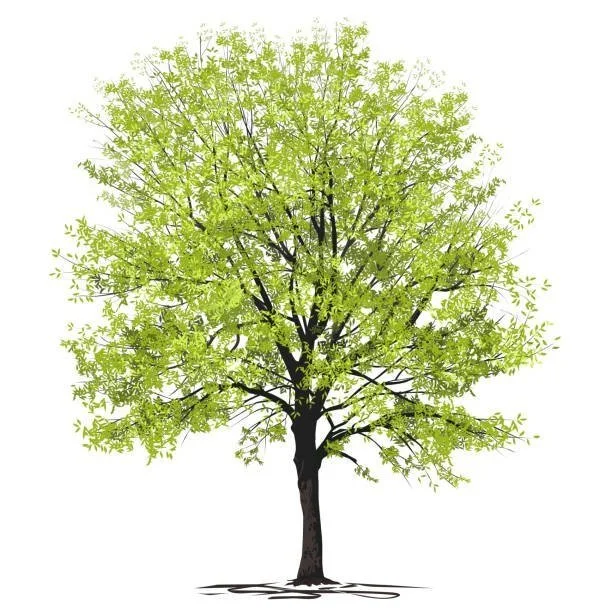
The ash tree whispers,
Samara seeds take to flight,
Life spins on the breeze.
Ash trees (Fraxinus spp.) are a vital component of ecosystems across the Northern Hemisphere, valued for their ecological, cultural, and economic significance. As tree stewards, understanding the biology, care, and challenges facing ash trees is essential to their preservation. This guide provides an overview of ash trees, their characteristics, ecological roles, and conservation efforts, along with resources for further learning.
Overview of Ash Trees
Ash trees belong to the Oleaceae family and are deciduous, meaning they shed their leaves annually. They are native to North America, Europe, and Asia, with species like the European Ash (Fraxinus excelsior), White Ash (Fraxinus americana), and Black Ash (Fraxinus nigra) being among the most well-known. Unfortunately, many ash species are under threat from pests like the Emerald Ash Borer (EAB) and diseases such as Ash Dieback (Hymenoscyphus fraxineus).
Physical Characteristics
Ash trees are easily identified by their pinnately compound leaves, which consist of 5–11 leaflets with serrated edges. They produce winged seeds called samaras, often referred to as "helicopter seeds," which are dispersed by wind. Mature trees can reach heights of 50–120 feet, with a spread of 40–60 feet. The bark is smooth and gray in young trees, developing diamond-shaped ridges as they age.
Ecological Role
Ash trees play a critical role in their ecosystems. They provide food and habitat for wildlife, including birds like woodpeckers and finches, and support pollinators such as beetles and bees. Their extensive root systems help reduce soil erosion and improve water infiltration. Additionally, ash trees form symbiotic relationships with mycorrhizal fungi, enhancing nutrient uptake.
Cultural and Economic Importance
Ash wood is highly valued for its strength and flexibility, making it ideal for furniture, flooring, and tool handles. Historically, Native Americans used Black Ash for basketry and medicinal purposes. In Norse mythology, the ash tree is symbolized by Yggdrasil, the "World Tree," representing the connection between heaven, earth, and the underworld.
Threats and Conservation
Ash trees face significant threats from invasive pests and diseases. The Emerald Ash Borer, an invasive beetle, has devastated ash populations in North America, while Ash Dieback has critically endangered European Ash trees. Conservation efforts include genetic research to develop resistant species, public awareness campaigns, and quarantine measures to prevent the spread of pests.
Care and Maintenance
Watering: Young trees require regular watering, while mature trees are drought-tolerant.
Pruning: Prune in late winter to remove dead or diseased branches.
Pest Management: Monitor for signs of EAB infestation and consult local extension services for treatment options.
Soil Health: Use mulch to retain moisture and protect roots, and apply balanced fertilizer in early spring if growth is poor.
Planting Tips
Timing: Plant in early spring or fall.
Spacing: Allow 30–50 feet between trees to accommodate mature spread.
Companion Plants: Ferns, hostas, and shade-tolerant wildflowers are excellent companions.
Soil Preparation: Amend soil with organic matter to improve drainage.
Environmental Benefits
Ash trees contribute significantly to environmental health by sequestering carbon, reducing urban heat islands, and improving air quality. A mature ash tree can absorb approximately 48 pounds of CO2 annually and produce about 260 pounds of oxygen.
Annotated Bibliography: Ash Trees (Fraxinus app.)
Scientific Research & Ecology
1. USDA Forest Service. (2023). Ash Tree Identification and Ecology. Retrieved from https://www.fs.fed.us
· Provides detailed descriptions of ash tree species, ecological roles, and conservation status, along with identification images.
2. Arbor Day Foundation. (2023). Ash Tree Species Guide. Retrieved from https://www.arborday.org
· Offers a guide to different species of ash trees, including their growth habits, soil preferences, and environmental benefits.
3. University of Minnesota Extension. (2023). Managing Ash Trees in the Landscape. Retrieved from https://extension.umn.edu
· Focuses on urban and suburban ash tree management, including care, pest prevention, and replacement strategies.
4. Tallamy, D. W. (2007). Bringing Nature Home: How You Can Sustain Wildlife with Native Plants. Timber Press.
· Discusses the ecological importance of ash trees in supporting native wildlife, including insects, birds, and fungi.
5. BugwoodWiki. (2023). Emerald Ash Borer and Ash Tree Conservation. Retrieved from https://wiki.bugwood.org
· A collaborative database with extensive resources on Emerald Ash Borer (EAB) identification, monitoring, and conservation efforts.
Folklore, Mythology & Cultural Significance
1. National Park Service. (2023). Cultural Significance of Ash Trees. Retrieved from https://www.nps.gov
· Explores the historical and mythological significance of ash trees, including their role in Native American traditions and Norse mythology.
2. Gaiman, N. (2017). Norse Mythology. W. W. Norton & Company.
· Retells the legend of Yggdrasil, the World Tree, which is often identified as an Ash tree, serving as the cosmic connection between realms.
3. Matthews, J., & Matthews, C. (1994). The Encyclopedia of Celtic Wisdom: The Celtic Shaman’s Sourcebook.The Aquarian Press.
· Describes the Celtic reverence for the Ash tree, symbolizing protection, wisdom, and transformation in Druidic practices.
4. Evans, J. (2019). The Mythic Forest, the Green Man and the Spirit of Nature. Routledge.
· Examines Ash tree lore in European traditions, including its associations with protection, renewal, and spiritual resilience.
5. Frazer, J. G. (1890). The Golden Bough. Macmillan.
· Discusses the Ash tree in European pagan rituals, particularly its role in sacred groves and fertility rites.
Poetry & Literature Featuring Ash Trees
1. Romero, J. C. “The Ash Tree.” Retrieved from Poetry International
· A reflective poem drawing parallels between human endurance and the life cycle of the Ash tree.
2. Wilson, A. “The Ash Tree.” Retrieved from PoemHunter
· A lyrical piece celebrating the resilience and symbolic presence of the Ash tree.
3. Longley, M. “Ash Keys.” Retrieved from Wake Forest University Press
· A poetic meditation on Ash tree seeds (“keys”) and their connection to memory and passage of time.
4. Anonymous. “White Ash Lament.” Retrieved from Forest Society
· A poignant tribute lamenting the decline of White Ash trees due to disease and environmental changes.
5. PoetrySoup. (n.d.). Ash Tree Poems Collection. Retrieved from PoetrySoup
· A collection of poems from multiple authors celebrating the Ash tree’s strength, beauty, and significance in folklore.
Ash Tree Names
1. Widow Maker - Refers to the tendency of large, brittle branches to break and fall unexpectedly, especially during storms or windy conditions.
2. Tree of Life - Derived from its representation in Norse mythology as Yggdrasil, the World Tree that connects the heavens, earth, and underworld.
3. Keys Tree - Refers to the tree’s samara seeds, which resemble old-fashioned keys or helicopters.
4. Helicopter Tree - A playful name inspired by the spinning, winged samaras (seeds) released by the tree.
5. Basket Tree - Especially in reference to black ash, whose flexible wood has historically been used for basket weaving by Native Americans.
6. Canoe Tree - Refers to its historical use by Indigenous peoples to create strong, lightweight canoe paddles.
7. Fever Tree - A name used in folklore for its bark, which was believed to have medicinal properties for treating fever and other ailments.
8. Shovel Tree - Refers to its strong, straight-grained wood, often used for making shovel handles, tool handles, and oars.
9. Venus of the Forest - A poetic name reflecting the ash tree’s graceful shape and widespread use in cultural references to beauty and utility.
10. Ash Keys - Refers to the winged seeds, which resemble old-fashioned iron keys.
11. Hanging Tree - A grim name found in some folklore, referring to the use of its sturdy branches for hangings.
12. Snake Tree - Tied to old beliefs that ash trees could repel snakes, with folklore claiming that snakes wouldn’t cross a circle drawn with an ash branch.
Mnemonics for Fun
General: Adaptable Samara Hardwood
A: Adaptable roots, stabilizing soil and tolerating a wide range of soil conditions.
S: Samara seeds, single-winged for wind dispersal and genetic variation.
H: Hardwood durability, valued in tools, furniture, and sports equipment for its shock resistance and elasticity.
Leaves: Alternate Symmetry Hinged
A: Opposite arrangement (specific to ash leaves, not alternate).
S: Symmetrical, pinnate structure with evenly spaced leaflets.
H:Hinged at the base of the central rachis.
A.S.H. = Angular Streaks Harden
A: Angular ridges form with age.
S: Streaks create a diamond-shaped, interwoven texture.
H: The bark hardens over time, forming a durable surface.
A.S.H. = Achene, Samara, Helicopter
A: Achene is a dry, single-seeded fruit (e.g., related in structure).
S: Samara describes the winged fruit of the ash.
H: Helicopter motion occurs as the seed spins while falling, aiding dispersal.